
For
UK
audiences
The essential guide to product selection
The essential guide to product selection

Rapid triage test helping select patients for gastroscopy at the point of need. Quantitative immunochromatographic test for the detection of Helicobacter pylori (H. pylori) and atrophic gastritis in a clinic or point-of-care setting. An evolution of the GastroPanel ELISA method of detecting and quantifying H. pylori IgG antibodies and three stomach-specific biomarkers (pepsinogen I, pepsinogen II, gastrin-17) from EDTA plasma.

Closed high-volume transanal irrigation system with water bag with pump and disposable rectal catheters and collection bags, designed for bedbound patients.

Transanal irrigation system with hydrophilic waterfilled rectal balloon catheters that can be easily retained in the rectum during instillation, suitable for those who have difficulty keeping a cone in place or need a better seal to instill the irrigation water.

Transanal irrigation system with a 1500ml waterbag with pump and single-use hydrophilic cones.

Low-volume transanal irrigation system with a hand pump and single-use hydrophilic cones.

High-volume transanal irrigation system with a water-inflated balloon catheter.

High-volume transanal irrigation system with a water bag with pump, a water flow regulator and 30 single-use cones, designed to be simple and easy to use.

Low-volume transanal irrigation system with a soft pump and 30 single-use cones designed to enable a better reach for patients with balance and/or hand-dexterity issues. Small option has shorter, narrower cones.

Low-volume rectal irrigation system with a soft pump and 30 single-use cones, designed to be simple, discreet and efficient. Small option has shorter, narrower cones.
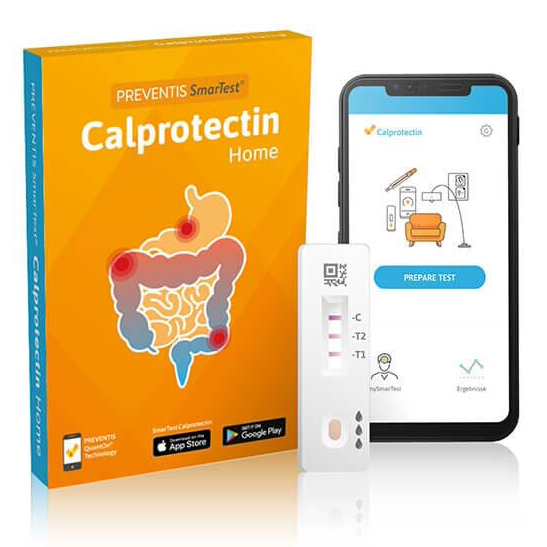
A simple-to-use inflammatory bowel disease stool test that enables individuals with Crohn’s disease or ulcerative colitis to monitor their disease activity at home. Patients can use the quantitative faecal calprotectin test at home or anywhere else with minimum preparation or disruption. This in vitro bowel inflammation test measures calprotectin using gold-conjugated anti-calprotectin antibodies in a lateral flow test in conjunction with a smartphone app which quantifies and reports the result so that patients and providers can evaluate the effectiveness of treatment controlling the disease. The app scans and analyses the faecal calprotectin test result according to the intensity of the control and test lines on the lateral flow test. The quantitative results of the test are then sent automatically to the online portal for the patient’s clinical team to monitor remotely.